
Play Sand For Sandblasting This Using play sand for sandblasting is a topic that sparks curiosity among hobbyists, DIY enthusiasts, and even some professionals who want to cut costs while experimenting with basic abrasive projects. The idea of using play sand for sandblasting sounds simple, but there is far more behind the decision than just saving money. When people hear about play sand being used in an abrasive blasting setup, they often imagine a cheap and convenient shortcut. While play sand can indeed be used for sandblasting in certain situations, the truth is more complex, and understanding these layers can help anyone make a safer and more informed choice.
When someone considers using play sand for sandblasting, the first question that usually comes to mind relates to practicality. Is it worth it? Will it perform well? Can it damage equipment? All of these concerns are valid, and the real value lies in knowing when play sand for sandblasting is acceptable and when it becomes a hazard. That balance between accessibility and quality is what makes the discussion around play sand for sandblasting so interesting for both beginners and seasoned DIY makers who enjoy experimenting with different abrasive media.
Why People Consider Play Sand For Sandblasting
Many people gravitate toward play sand for sandblasting because it is easy to find. Hardware stores, garden supply centers, home improvement chains, and even toy departments stock it constantly. That sense of convenience makes play sand feel like a naturally available abrasive that anybody can purchase without special orders or supplier accounts. The idea that such an accessible product might be capable of stripping paint, cleaning rust, or preparing metal seems incredibly appealing to anyone who wants to experiment with sandblasting techniques on a tight budget.
Another reason people lean toward play sand for sandblasting is the low cost. Traditional blasting media can feel expensive, especially to someone who has never sandblasted anything before and wants to test the process for the very first time. Play sand appears to offer a cheap alternative, especially when a basic project does not seem to justify the price of premium abrasives. While budget considerations play a role, many expect the performance of play sand for sandblasting to align well enough with their goals, especially for small surface prep jobs.
Understanding What Play Sand Really Is
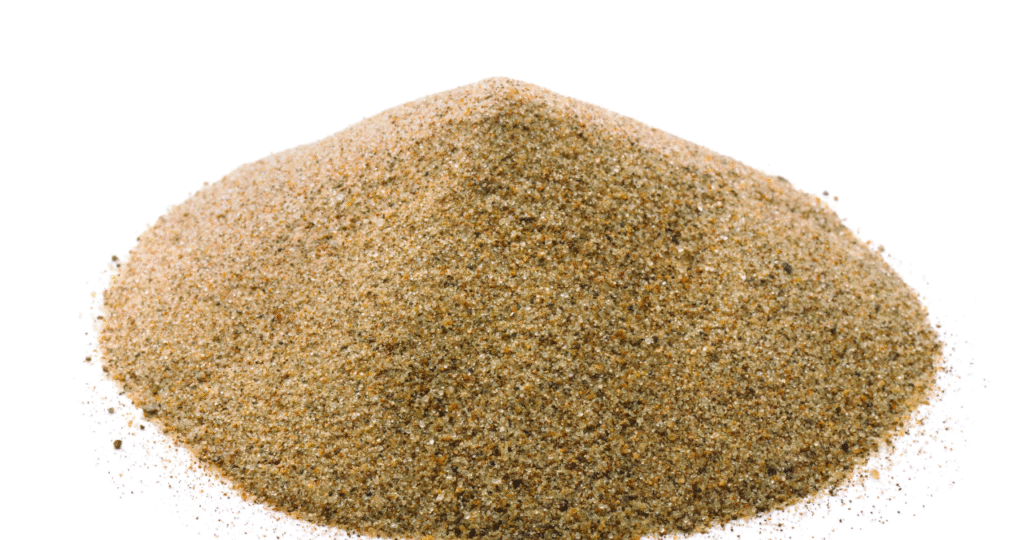
Before using play sand for sandblasting, it is helpful to understand what play sand actually contains. Play sand is usually washed and screened, but its consistency varies widely between brands. Some batches are soft and fine, while others contain rough grains and tiny stones. These inconsistencies matter greatly when applying play sand for sandblasting, because the uniformity of abrasive media influences blasting pressure, nozzle stability, and the final surface finish. Reliable blasting results require consistent particle size, something play sand is not specifically engineered to deliver.
The processing of play sand is also geared toward child safety rather than abrasive performance. It is meant for sandboxes, crafts, and play areas rather than high-pressure blasting systems. Even though play sand looks similar to many types of blasting sand, it lacks the refined hardness, angularity, and silica control typically associated with abrasives designed for blasting. These distinctions become crucial in understanding why play sand for sandblasting is sometimes discouraged by professionals who prioritize both performance and safety.
The Performance of Play Sand For Sandblasting
When performance is considered, play sand for sandblasting can feel unpredictable. The grains might be too rounded, which reduces cutting ability. Without sharp edges, particles bounce more than they bite, which leads to slower material removal and inconsistent results. A person might attempt to blast rust or paint using play sand for sandblasting and feel frustrated by how slowly progress happens compared to using abrasives that are designed to fracture and cut aggressively.
Another performance limitation involves moisture content. Play sand often retains slight moisture, even when packaged, and even more when stored outdoors. Moisture causes clumping, which results in clogged hoses, stuck nozzles, and inconsistent blasting flow. For someone trying to use play sand for sandblasting, moisture can turn what should be a smooth blasting session into a cycle of equipment jams and constant troubleshooting. The frustration alone often outweighs the financial savings of choosing play sand as a blasting media.
Equipment Wear From Using Play Sand For Sandblasting
Equipment durability is another factor worth considering. When someone uses play sand for sandblasting, tiny stones or impurities in the sand can cause internal wear on hoses, valves, and nozzles. Blasting systems are designed for clean, uniform media, not for unexpected contaminants. The irregular minerals mixed into play sand might accelerate equipment damage, especially when pressurized air forces these particles rapidly through a system. The result is often premature replacement of essential parts.
Nozzle wear is especially common when using play sand for sandblasting. Many nozzles are engineered for specific abrasives with predictable hardness. Play sand, depending on its source, may contain harder grains than expected, which leads to faster erosion of the nozzle’s interior walls. Once a nozzle begins to lose shape, airflow changes, and the blast pattern becomes uneven. That reduces blasting quality and increases consumption of abrasive material. Over time, this makes using play sand for sandblasting much less cost-effective than it initially appears.
Safety Concerns With Play Sand For Sandblasting
Safety is one of the most overlooked but crucial aspects of this topic. Play sand often contains crystalline silica, a substance that becomes extremely hazardous when inhaled in dust form. When someone uses play sand for sandblasting without proper respiratory protection, they risk inhaling fine silica particles. These particles can lead to serious lung diseases, including conditions that are irreversible and potentially life-threatening. Anyone considering play sand for sandblasting must take respiratory safety seriously, regardless of how harmless the sand may look in a sandbox.
Silica dust exposure is not limited to the operator. Anyone in the surrounding area may also inhale the dust if the blasting occurs outdoors or in an open environment. This makes containment and ventilation essential when using play sand for sandblasting. Even though many assume play sand is harmless because it is used by children, dust generated through sandblasting is not the same as dust generated through digging in a sandbox. Pressure blasting transforms solid particles into dangerous airborne contaminants that require protective equipment and controlled environments.
Comparing Play Sand To Professional Blasting Media
When compared to professional blasting media, play sand for sandblasting appears far less efficient. Professional abrasives such as crushed glass, garnet, slag, or specialized silica-free sand are engineered to deliver consistent particle shapes and performance. These materials cut faster, last longer, and generate less dust, all while reducing equipment strain. Someone who switches from play sand for sandblasting to a proper abrasive often notices immediate improvements in speed and quality.
Professional blasting materials also undergo rigorous screening. This screening removes impurities, ensures moisture control, and helps maintain consistent granularity. When consistency is present, blasting becomes predictable and manageable. That predictability is especially helpful for someone working on detailed restoration, auto parts, or delicate surfaces. When the media behaves as expected, the operator has far more control over the outcome. This is not always the case when relying on play sand for sandblasting, where each batch may behave differently.
When Play Sand For Sandblasting Might Be Acceptable
Despite its limitations, there are still scenarios where using play sand for sandblasting might make sense. Some DIY users who work outdoors on rough metal pieces, old rusted rims, or heavy objects might accept the inconsistency in exchange for cost savings. When precision is not required, play sand for sandblasting may be good enough to remove heavy scale or thick rust, especially when someone only needs a general cleaning rather than a perfectly prepared surface.
Another situation involves experimentation or learning. If someone wants to understand blasting mechanics without investing in expensive media, play sand for sandblasting may serve as an introductory abrasive. As long as safety precautions are taken and expectations are realistic, play sand can help beginners gain confidence before transitioning to better media. It becomes a stepping-stone that allows experimentation without the fear of wasting high-quality materials during the learning stage.
Preparing Play Sand Before Sandblasting
Anyone who genuinely wants to use play sand for sandblasting should consider preparing it properly beforehand. Preparation can reduce many of the issues that arise with raw play sand. Drying the sand thoroughly is essential, as even slight moisture can create clumping problems. Spreading the sand across a flat surface and allowing it to dry naturally can help eliminate moisture, although it does require time and space.
Screening the sand is another helpful step. By passing the play sand through a fine mesh, someone can remove rocks, oversized grains, or unwanted debris. This leads to smoother flow through blasting equipment and reduces the risk of nozzle blockages. While this extra work increases the amount of time required before blasting begins, it can significantly improve the reliability of using play sand for sandblasting, especially during small-scale DIY projects where budget limitations are a concern.
Environmental and Clean-Up Considerations
Environmental impact is another factor that many people overlook. When using play sand for sandblasting, dust dispersion becomes more complex because the particles break down quickly, creating heavier airborne clouds. Cleanup becomes more time-consuming, especially outdoors, where sand may scatter across grass, driveways, or nearby surfaces. Since play sand breaks apart more easily than engineered abrasives, it tends to leave a finer residue.
The disposal of used play sand for sandblasting must also be handled carefully. If the sand contains paint chips, rust, or contaminants from the blasted surface, it may require proper disposal instead of simply being dumped on the ground. Depending on the location, local guidelines may dictate how abrasive waste must be managed. Anyone who uses play sand for sandblasting should be mindful of responsible cleanup, especially when working in residential areas where dust and debris can spread easily.
Surface Finish Quality With Play Sand For Sandblasting
Surface finish is another area where results vary widely when using play sand for sandblasting. Because play sand grains are not uniform or angular, the finish often looks inconsistent. Some parts of the surface may appear smooth, while others appear rough or unevenly scratched. For someone preparing a surface for paint, coatings, or restoration, this inconsistency can become problematic. Proper adhesion often requires specific surface profiles that are difficult to achieve with play sand.
On the other hand, someone working on heavy machinery, old tools, or rough metal might not need a perfect profile. In these cases, the irregular finish created by play sand for sandblasting might actually be acceptable. The main concern is whether the result aligns with the goals of the project. For artistic projects or rustic finishes, the unpredictable texture may even add character, making play sand a practical choice for specific creative outcomes.
Alternatives To Play Sand For Sandblasting
Anyone exploring the idea of play sand for sandblasting should consider alternatives that offer safer, cleaner, and more consistent performance. Crushed glass is one popular option. It is environmentally friendly, cuts well, and contains no crystalline silica. Garnet is another excellent choice known for its hardness and reusability. These abrasives offer better control, improved performance, and reduced dust, all while protecting equipment from excessive wear.
Another alternative is walnut shell or corn cob media. While softer than traditional abrasives, they are perfect for delicate surfaces where aggressive cutting would be too harsh. These materials are often preferred for wood, fiberglass, and vintage items. Someone switching from play sand for sandblasting to these alternatives often finds them easier to work with, especially indoors, where dust control becomes more important.
Final Thoughts On Using Play Sand For Sandblasting
Choosing to use play sand for sandblasting ultimately depends on the goals, safety considerations, and expectations of the person doing the work. While play sand is accessible, affordable, and useful for learning or rough cleaning, it is far from ideal when quality, consistency, and safety are priorities. Understanding the risks and limitations helps ensure that the choice is informed rather than based on convenience alone.
For those who decide to use play sand for sandblasting, preparation, protection, and realistic expectations are crucial. With proper precautions, play sand can provide a functional, budget-friendly experience in limited applications. However, those seeking professional results, cleaner finishes, and safer working conditions will likely prefer purpose-designed abrasive media. In the end, the decision revolves around the project’s demands and the user’s willingness to balance convenience with performance.