
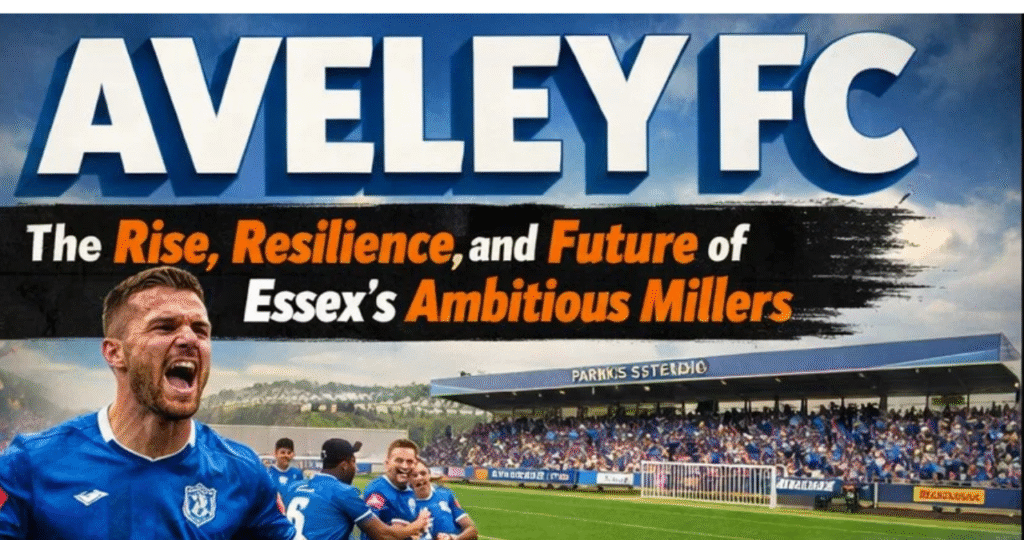

Nestled within the Thurrock borough of Essex, a story of community ambition and footballing passion quietly unfolds. This is the story of Aveley FC, a football club whose identity is woven into the very fabric of its locale, a club that has experienced the dizzying highs of promotion and the grounding realities of non-league football’s relentless challenge. Often simply known as “the Millers,” their journey is not one of global superstars or billion-pound transfers, but of volunteers, local heroes, and a persistent vision that refuses to be dimmed. To understand Aveley FC is to understand modern non-league football—a world where community ties are as crucial as tactical formations, where survival and growth are hard-won battles, and where every matchday represents a collective act of local faith. This comprehensive exploration delves into the complete tapestry of this remarkable club, from its historical roots and iconic home to its modern ambitions and the unwavering spirit that defines it. We will chart the course of a club that, from its humble beginnings, continues to strive, evolve, and embody the very essence of the beautiful game at its most authentic level.
The Humble Beginnings and Formative Years
The origins of Aveley FC are steeped in the tradition of English grassroots football. Founded in 1927, the club began its life in the Romford & District League, a far cry from the national stage it would later grace. For decades, the Millers were a quintessential local side, playing on park pitches, driven by the commitment of players and committee members who balanced their football passions with day jobs and family life. The post-war years saw the club gradually ascend through the intricate pyramid of Essex football, laying a foundation of local rivalry and community engagement that remains its bedrock.
This prolonged period in the county leagues was not a stagnation but an essential incubation. It was here that the character of Aveley FC was forged. Matches against nearby villages and towns weren’t just games; they were community events, defining weekends and fostering a loyal, if modest, following. The lack of flashy infrastructure or professional contracts meant the club’s survival depended on volunteer hours, gate receipts from a handful of spectators, and a deep-seated love for the game. These formative years instilled a resilience and a profoundly local identity that the club would carry with it, a reminder of its roots even as it later climbed to unprecedented heights.
The Parcelserve Ground and a Sense of Place
A club’s home is its heartbeat, and for Aveley FC, that heartbeat is the Parcelserve Ground, more commonly and fondly known as Mill Field. Located on Ship Lane, this stadium is a testament to non-league practicality and charm. Its stands and terraces, developed over time, tell a story of incremental progress. From basic dugouts and rope barriers, the ground has evolved to meet the standards required for higher-level football, including the installation of floodlights and seated stands, all while retaining an intimate, authentic atmosphere that is often lost in larger, more sterile venues.
Mill Field is more than just a collection of structures; it is the physical embodiment of the club’s community soul. On matchdays, it buzzes with a familiar, neighborly energy. The clubhouse acts as a social hub, the tea bar is a beacon of warmth on cold afternoons, and the proximity of the pitch to the stands creates an immediacy and intensity that connects players and fans directly. This sense of place is irreplaceable. For the loyal supporters of Aveley FC, a trip to Mill Field is a ritual, a weekly pilgrimage to a space that feels theirs uniquely, a fortress built not of concrete and steel alone, but of shared history and collective hope.
The Modern Era: Ambition and Strategic Ascent
The turn of the 21st century marked the beginning of a new, more ambitious chapter for Aveley FC. While maintaining its community core, the club began to implement a more strategic vision for on-field success. This period saw targeted managerial appointments and a focus on building squads capable of challenging for promotion, signaling a shift from simply participating to actively competing. The Millers started to make consistent waves in the Isthmian League, establishing themselves as a formidable opponent and a club with clear aspirations beyond their traditional ceiling.
This ambition was not reckless but calculated. It involved improving training facilities, enhancing youth development pathways, and engaging more professionally with local businesses for sponsorship. The club’s leadership understood that sustainable progress in the non-league pyramid required a balance of footballing talent and commercial stability. Aveley FC was no longer content with mere survival; it was building a platform for ascent. This strategic shift transformed the club’s self-perception and its reputation within non-league circles, setting the stage for the historic achievements that would soon follow under transformative leadership.
The Justin Gardner Revolution and Historic Promotion
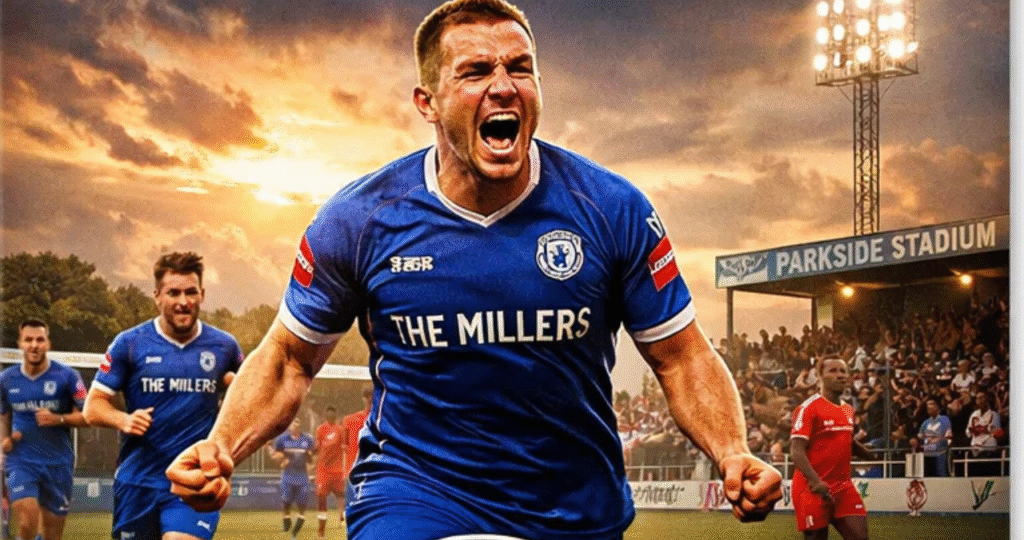
The appointment of manager Justin Gardner in 2022 proved to be the catalyst for one of the most successful periods in the club’s history. Gardner, with a clear philosophy and an ability to galvanize a squad, engineered a season of extraordinary triumph. The 2022-23 campaign became the stuff of legend for supporters of Aveley FC. Playing an attractive, high-intensity brand of football, the Millers dominated the Isthmian League North Division, securing promotion in a commanding fashion that captured the attention of the wider non-league community.
This promotion was historic because it propelled Aveley FC into the pinnacle of the non-league system for the first time: the National League South. This achievement represented more than just a trophy; it was a validation of years of groundwork and a monumental leap in stature. The club was now rubbing shoulders with former Football League sides and fully professional outfits. The promotion was a testament to the strategic planning of the board, the managerial prowess of Gardner, and the unwavering commitment of the players. It was a moment that redefined what was possible for the Millers and placed Aveley FC firmly on the national non-league map.
Competing in the National League South
Entering the National League South represented the greatest challenge in Aveley FC’s history. The league is a brutal environment, featuring clubs with significant budgets, large fanbases, and full-time playing staffs. For a community-focused club like Aveley, the first season at this level was a monumental test of adaptability, resourcefulness, and resolve. Every match was a battle against established names, requiring a tactical shrewdness and mental fortitude unlike anything needed in previous leagues.
The experience of competing at this elevated level provided invaluable lessons. It highlighted the gulf in resources but also showcased the incredible spirit within the Aveley FC camp. The club learned to be tactically disciplined, to maximize set-pieces, and to fight for every point. While the primary objective was always to secure survival and establish a foothold, the very presence of Aveley FC in the National League South served as an inspiration. It proved that with the right structure, unity, and belief, a club with deep community roots could compete on one of non-league football’s biggest stages, earning respect through sheer determination.
The Community Ethos and Fan Culture
Beyond the results on the pitch, the true lifeblood of Aveley FC is its unbreakable bond with the local community. The club operates as a social enterprise as much as a sporting one. Its matchdays are family-friendly events, its facilities are used by local groups, and its initiatives often extend to charity work and youth engagement programs. This ethos creates a unique fan culture—one based on familiarity, shared identity, and mutual support rather than passive consumption. Supporters are not just spectators; they are volunteers, sponsors, and ambassadors.
This deep integration fosters a formidable sense of belonging. When the team takes to the field, it does so representing not just a badge, but the people of Aveley and Thurrock. This connection provides the club with a resilience that cannot be bought. In difficult moments, the crowd’s support remains steadfast; in times of triumph, the celebrations are deeply personal. The culture surrounding Aveley FC is a powerful reminder that, at its best, football serves as a focal point for community pride and collective identity, a principle the Millers embody with genuine authenticity.
Youth Development and the Pathway to Progress
For a club of Aveley FC’s stature, a sustainable future is intrinsically linked to its ability to nurture local talent. The club’s youth academy and development teams are not an afterthought; they are a central pillar of the long-term strategy. By investing in coaching and facilities for young players, the Millers aim to create a tangible pathway from the youth pitches of Essex to the first team at Mill Field. This serves a dual purpose: it can unearth first-team players of the future, and it deepens the club’s ties with local families.
The success of this philosophy is measured not just in players who break into the senior squad but in the overall health of the football ecosystem around Aveley FC. It provides hundreds of local children with high-quality coaching and a connection to their local club. Even for those who don’t make it as professionals, the experience fosters a lifelong affinity for the Millers. This focus on development ensures the club’s identity remains locally rooted and provides a cost-effective model for squad building, aligning perfectly with the community-focused mission of Aveley FC.
Rivalries and Local Derbies
The passion of non-league football is often most intensely felt in local derbies, and for Aveley FC, these matches are pivotal occasions. Historic rivalries with nearby clubs such as Grays Athletic, Tilbury, and East Thurrock United are fixtures that instantly raise the temperature. These contests are about more than league points; they are battles for local bragging rights, contested in front of partisan crowds where the distance between the pitch and the stands seems to vanish. The intensity is raw, the atmosphere electric, and the results are remembered long after the season ends.
These derbies are crucial for the club’s identity and fan engagement. They represent the historical tapestry of Essex football, where neighboring towns compete for supremacy. For the players, it’s a test of mentality and desire. For the fans, it’s a chance to assert their community’s pride. The revenue and attention generated from a big local fixture also provide a welcome boost. These rivalries, built on decades of proximity and competition, are a fundamental part of the narrative of Aveley FC, adding a layer of compelling, hyper-local drama to each season.
Financial Realities and Sustainable Growth
Navigating the financial landscape of modern non-league football is a constant tightrope walk for clubs like Aveley FC. The jump to the National League South brings increased prestige but also significantly higher costs: travel expenses, player allowances, stadium maintenance, and the need for enhanced medical and training provisions all strain a budget that is not subsidized by television deals. The club must be creatively entrepreneurial, relying on a mix of gate receipts, sponsorship from local businesses, fundraising events, and the invaluable contribution of volunteers.
Sustainability, therefore, becomes the paramount objective. The board of Aveley FC must balance ambition with prudence, investing enough to remain competitive without jeopardizing the club’s very existence. This often means making tough decisions and finding innovative ways to generate revenue, such as renting out facilities or developing commercial partnerships. The financial model is a community model—it succeeds when local businesses back the club and when fans turn out in strong numbers. This delicate equilibrium is the unsung story behind every matchday, a testament to the careful stewardship required to keep a community institution like Aveley FC alive and thriving.
The Club’s Identity and Future Vision
The identity of Aveley FC is a powerful blend of traditional community values and modern sporting ambition. It is a club that remembers its park-pitch origins while daring to dream of competing at the highest levels of the non-league game. This duality is its greatest strength. The badge symbolizes not just a football team, but the resilience and ambition of the place it represents. The players are seen as local representatives, and the success of the team is felt as a collective achievement for the town.
Looking to the future, the vision for Aveley FC is likely built on consolidation and intelligent growth. Establishing the club as a stable National League South entity is a primary goal. Long-term, continued development of Mill Field, the expansion of the youth system, and a deepening of community outreach programs form the pillars of a sustainable future. The dream of reaching the National League Premier—the fifth tier of English football—is no longer a fantasy, but a challenging target that requires patience, investment, and continued unity. The journey of Aveley FC is ongoing, and its future chapters will be written by its ability to hold onto its soul while reaching for the stars.
| Era / Period | Typical League Level | Key Characteristics & Milestones | Home Ground |
|---|---|---|---|
| Founding & Early Years (1927-1970s) | Essex County Leagues (e.g., Romford & District) | Amateur, community-focused football. Volunteer-run, local players. Foundation of club identity. | Various public parks and fields in Aveley. |
| Consolidation & Ascent (1980s-1990s) | Isthmian League Divisions 2 & 1 (Lower Tiers) | Gradual rise into the regional non-league pyramid. Improved facilities at Mill Field. Establishing a permanent home. | The Parcelserve Ground (Mill Field) developed. |
| Isthmian League Mainstay (2000s-2022) | Isthmian League North & Premier Divisions | Era of strategic ambition. Frequent playoff contenders. Building a competitive model within the 7th/8th tier. | Modernized Mill Field with floodlights, seated stand. |
| The Historic Leap (2022-Present) | National League South (Step 2) | Justin Gardner’s promotion-winning season. Club operating at highest level in its history. Facing former Football League clubs. | Further ground grading improvements to meet National League standards. |
Conclusion
The story of Aveley FC is a powerful narrative of what football can and should be at its core. It is a chronicle not of galactic superstars, but of local lads, dedicated managers, and volunteers who paint stands and run tea bars. From its humble 1927 beginnings in the Essex County leagues to its current status as a competitive outfit in the National League South, the journey of the Millers exemplifies resilience, community, and intelligent ambition. The club has shown that success is not defined solely by trophies, but by the strength of its bond with the people of Aveley and Thurrock, by its ability to provide a pathway for young talent, and by its unwavering commitment to survive and thrive in the challenging ecosystem of non-league football. The Parcelserve Ground is more than a stadium; it is a testament to incremental progress and collective faith. As Aveley FC looks to the future, it does so with a clear identity—one that honors its past while ambitiously chasing a brighter tomorrow. The Millers stand as a beacon for every community club, proving that with the right blend of passion, strategy, and local support, even the most modest dreams can reach impressive heights.
Frequently Asked Questions (FAQs)
When was Aveley FC founded?
The club was founded in 1927, making its centenary anniversary a significant upcoming milestone. For nearly a century, Aveley FC has been a fixture in Essex football, evolving from a local parks team into a National League South competitor.
What league does Aveley FC currently play in?
As of the latest season, Aveley FC competes in the National League South, which is Step 2 of the English football pyramid. This is the highest level the club has ever reached, marking a historic period in its journey.
Where does Aveley FC play its home games?
The club plays at the Parcelserve Ground on Ship Lane in Aveley, Essex. Known affectionately as Mill Field, this stadium has been developed over decades and is the heart of the community for supporters of Aveley FC.
What are the main rivalries for Aveley FC?
The Millers have traditional local derbies with other Essex-based clubs, most notably Grays Athletic, Tilbury, and East Thurrock United. These matches are fiercely contested and are highlights of the season for fans of Aveley FC.
How can I support Aveley FC?
The best way to support is by attending home matches at Mill Field. Beyond that, you can follow the club on social media, become a member or season ticket holder, volunteer, or explore commercial sponsorship opportunities. Every form of support is vital to a community club like Aveley FC.
You May Also Read
The Complete Guide to Pitchero: Revolutionizing Amateur Sports Club Management