
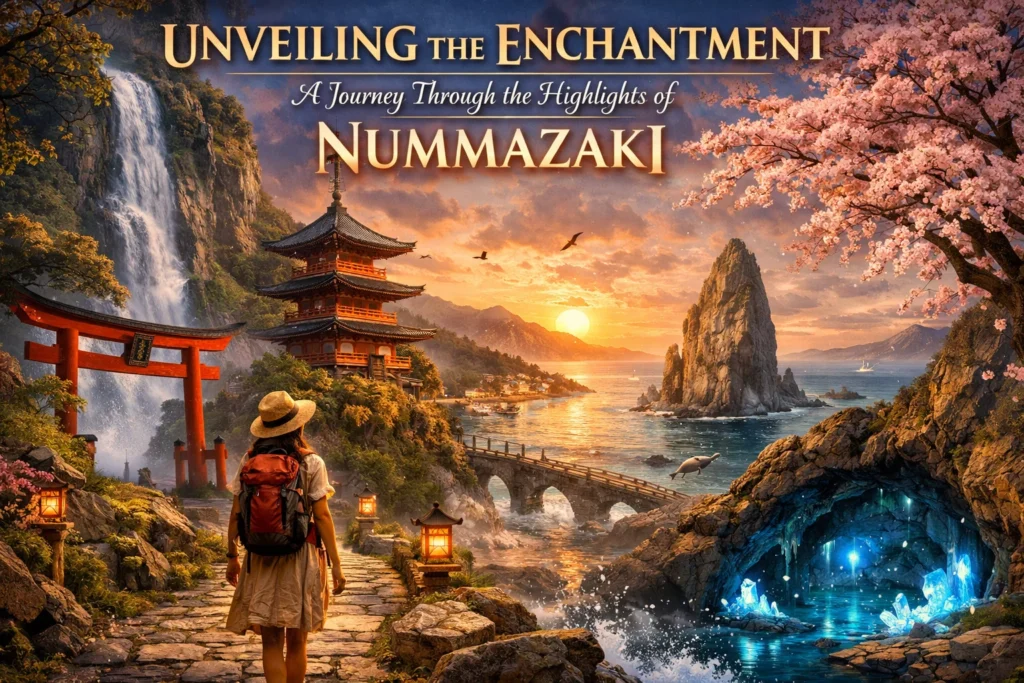

Highlights of Nummazaki.Tucked away from the well-worn tourist trails lies Nummazaki, a destination of profound subtlety and surprising depth. To the casual observer, it might seem like another picturesque locale, but to those who linger, its true character unfolds layer by layer. This isn’t a place defined by a single, monolithic landmark, but rather by a collection of interwoven experiences—a tapestry of history, culture, nature, and artisanal spirit. The magic of Nummazaki is discovered in the quiet moments: the play of light on ancient stone, the taste of a centuries-old recipe, the vista from a windswept hill at dusk. This comprehensive guide is dedicated to unraveling that magic. Our mission is to move beyond simple listings and provide a deep, contextual understanding of what makes this town resonate. We will explore not just the “what,” but the “why” and the “how,” transforming your visit from a simple trip into a meaningful encounter. The true highlights of Nummazaki are experiences that engage all the senses and linger in the memory long after departure, and we are here to map them all for you.
The Historical Heartbeat of the Old Town
Highlights of Nummazaki Walking through Nummazaki’s Old Town is not merely a stroll;Highlights of Nummazaki it is a direct conversation with the past. The district is a miraculously preserved relic of a mercantile era, where narrow, flagstone-paved lanes wind between buildings showcasing distinct architectural evolution from the 16th through 19th centuries. The uniformity of the slate roofs, the worn wooden facades adorned with family crests, and the intricate ironwork on well heads tell a silent story of community, trade, and resilience. You aren’t just looking at history here; you are physically inhabiting its corridors, with every step offering a tangible connection to the generations that shaped this town’s unique identity.
Highlights of Nummazaki This historical core is anchored by Highlights of Nummazaki the Governors’ Residence, a sprawling complex that now serves as a living museum. Within its walls, meticulously curated exhibits do more than display artifacts; they recreate scenes from daily life across different social strata. The true value lies in the contextual explanations that link objects to broader economic trends and social customs. Exploring this area forms the foundational chapter for understanding all subsequent highlights of Nummazaki, as it provides the essential backstory against which the town’s modern culture makes perfect sense.
The Panoramic Vista from Sentinel Ridge
Highlights of Nummazaki For the quintessential view Highlights of Nummazaki that defines Nummazaki’s geographical personality, the ascent to Sentinel Ridge is non-negotiable. The journey itself is part of the experience—a meandering path through fragrant pine forests that occasionally breaks to reveal teasing glimpses of the landscape below. Reaching the summit, however, delivers a reward that genuinely takes one’s breath away. The panoramic spectacle unfolds a living map: the red-tiled roofscape of the Old Town cascading toward the bustling modern port, all framed by the dramatic crescent of the Azure Bay and the distant, mist-shrouded mountain range. It is the perfect place to grasp the town’s strategic layout and natural setting in a single, awe-inspiring glance.
Highlights of Nummazaki Photographers flock here for the legendary “Golden Hour,” but the vista’s character transforms wonderfully with the weather. A crisp morning offers staggering clarity, while an approaching storm can cast the entire scene in a dramatic, brooding light. This spot is more than a photo opportunity; it’s a place for contemplation. Standing here, one can easily imagine sentinels of old keeping watch, understanding why this location was so pivotal. This breathtaking panorama is universally cited as one of the premier highlights of Nummazaki, offering perspective in the most literal and figurative sense.
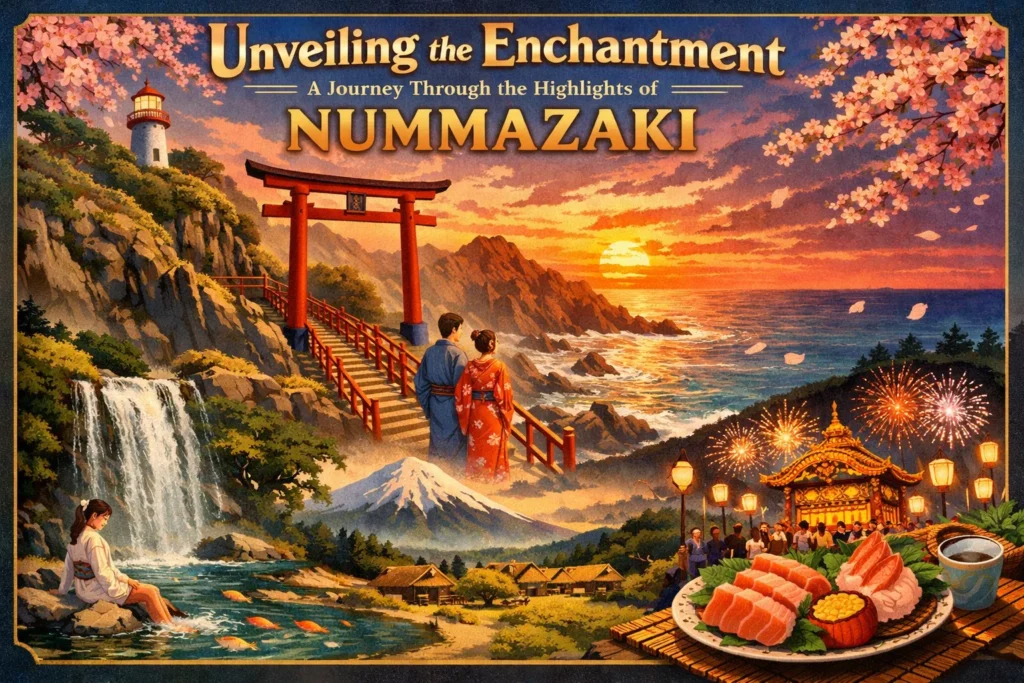
The Culinary Tradition of the Bay’s Bounty
Nummazaki’s cuisine is a direct love letter to the surrounding sea, Highlights of Nummazaki and its culinary scene is a masterclass in sustainable, hyper-local gastronomy. The star of the table is undoubtedly the Silverfin, a migratory fish caught using a traditional, low-impact method known as “thread netting,” practiced only in this stretch of coast. The flavor profile is distinctly clean and delicate, a result of the specific mineral content of the local waters. Chefs here treat the Silverfin with a reverence bordering on ceremony, serving it as sashimi, lightly grilled with sea salt, or marinated in a native citrus blend. Dining on this fish isn’t just a meal; it’s participation in a centuries-old ecological and cultural partnership.
Highlights of Nummazaki Beyond the Silverfin, the daily morning market at Highlights of Nummazaki the docks is a theater of freshness and community. This is where restaurateurs and home cooks alike select the day’s catch directly from the fishing boats. The atmosphere is one of vibrant, noisy commerce, filled with the salty tang of the ocean and the rapid-fire banter of buyers and sellers. For visitors, it’s an immersive experience—a chance to witness the unbroken chain from sea to plate. Engaging with this market is to understand that one of the definitive highlights of Nummazaki is its edible identity, a tradition sustained by deep respect for the maritime environment.
The Artisanal Legacy of Nummazaki Pottery
Highlights of Nummazaki Far from being generic souvenirs, Nummazaki pottery,Highlights of Nummazaki known locally as Nummayaki, represents a functional art form with a lineage tracing back to feudal kilns. Its defining characteristic is the “Aegean Crackle,” a unique glaze technique that results in a fine, web-like pattern reminiscent of ancient seafoam or cracked ice. This effect is not a flaw but a prized, deliberate outcome achieved through a precise cooling process guarded by a handful of multi-generational workshops. The color palette is intentionally restrained, drawing from local materials: deep oceanic blues, earthy clay reds, and soft ash whites, which allow the intricate crackle work to shine.
Visiting a studio like the renowned Takamura Workshop demystifies this art. Watching a master thrower center a lump of clay and effortlessly raise it into a perfect, symmetrical form is mesmerizing. The subsequent stages of drying, bisque-firing, glazing, and the final firing are explained with patient detail, highlighting how natural variations make each piece truly one-of-a-kind. Purchasing a piece of Nummayaki is not just acquiring an object; it is taking home a fragment of the town’s geological and artistic heritage. This hands-on connection to enduring craft is a profound entry point to the cultural highlights of Nummazaki.
The Seasonal Spectacle of the Lavender Slope
Highlights of Nummazaki While Nummazaki may be famed for its maritime culture, Highlights of Nummazaki an equally powerful sensory experience awaits inland at the Lavender Slope of Hokuto Hill. Each summer, a meticulously maintained expanse of land erupts into a breathtaking sea of violet, with row upon row of Lavandula angustifolia stretching toward the horizon. The visual impact is staggering, a vivid purple contrast against the green foothills and blue sky. But the true magic is olfactory—the air becomes thick with the plant’s calming, sweet-herbal fragrance, creating an atmosphere of pure serenity that attracts visitors and local wellness seekers alike.
Highlights of Nummazaki The slope is not a wild meadow but a working farm, and this duality adds to its charm. Visitors can learn about the distillation process used to extract the precious essential oil, a key ingredient in local soaps, sachets, and balms. The on-site distillery offers demonstrations, explaining how thousands of pounds of blooms are condensed into tiny vials of potent essence. This fusion of agriculture, tourism, and local product creation makes the Lavender Slope a multifaceted destination. It stands as a brilliant example of how one of the natural highlights of Nummazaki has been thoughtfully cultivated to support the community while offering an unforgettable seasonal experience.
The Architectural Whisper of the Maritime Library
Highlights of Nummazaki In a bold fusion of past and future, Highlights of Nummazaki the Nummazaki Maritime Library stands as a testament to the town’s forward-looking reverence for its history. Housed within the restored shell of a 19th-century brick warehouse, the interior is a contemporary marvel of light and space. A soaring, multi-level atrium dominated by a skeletal wooden sculpture resembling a whale’s ribcage allows sunlight to filter down onto reading nooks and archival displays. The architecture itself tells a story of transformation, where original industrial elements like iron support beams and heavy timber frames are seamlessly integrated with modern glass and steel.
Highlights of Nummazaki The library’s collection is its true treasure, specializing in nautical history, regional ecology, and the diaries of local explorers. It functions less as a silent repository and more as a dynamic community hub, hosting lectures by oceanographers, readings by authors, and workshops for model shipbuilders. As a local historian once noted during a talk there, “To understand the soul of a coastal town, you must first understand its relationship with the sea; this library is that relationship, codified and celebrated.” This building perfectly encapsulates how Nummazaki honors its past without being trapped by it, making the library a must-visit intellectual and architectural landmark.
The Spiritual Serenity of the Cliffside Shrine
Perched precariously on a rocky outcrop where the forest meets the open sea, the Cliffside Shrine (Gantō-jinja) offers a profoundly spiritual counterpoint to the town’s more bustling attractions. The approach is a ritual in itself—a long, stone-stepped path winding through dense, silent cedar groves, building a sense of anticipation and separation from the everyday world. The shrine complex is modest in size but immense in atmosphere, with its vermilion torii gate framing a stunning vista of the endless Pacific, creating a powerful symbolic junction of earth, spirit, and ocean.
This site is intimately connected to the town’s safety and prosperity, Highlights of Nummazaki historically dedicated to placating the sea gods and ensuring the safe return of fishermen. Visitors will notice small, painted wooden plaques (ema) depicting ships, offered as prayers for protection. The experience here is one of quiet reflection; the only sounds are the wind, the distant crash of waves far below, and the occasional ring of the offering bell. Whether one engages in the Shinto practice or simply soaks in the majestic tranquility, a visit to Gantō-jinja provides a moment of peaceful introspection that beautifully balances the more active highlights of Nummazaki.
The Nocturnal Ambiance of Lantern Lane
As dusk settles, a specific part of the Old Town undergoes a enchanting metamorphosis. Lantern Lane, a short, cobbled alley barely wide enough for two people to pass, comes alive not with electric light, but with the soft, warm glow of hundreds of traditional paper lanterns. Hung from eaves and wrought-iron brackets, they cast a dancing, amber light that paints the ancient wooden facades in dramatic shadows, transforming the familiar daytime scene into something mystical and storybook-like. The effect is deliberately low-tech and atmospheric, designed to evoke the feeling of stepping back into the Edo period after nightfall.
The lane is home to several intimate establishments—a tiny sake bar specializing in local brews, a shop selling handcrafted paper goods, and a two-table dessert cafe known for its sweet bean paste confections. The experience is about slow immersion. It’s about sipping a carefully curated sake while watching the lanterns sway in the evening breeze, or finding the perfect washi paper notebook by their gentle light. This deliberate, sensory-focused environment showcases how Nummazaki manages its evening appeal with thoughtful design rather than garish spectacle, creating an intimate and memorable nocturnal experience.
The Underwater World of the Marine Sanctuary
Nummazaki’s commitment to its environment is vividly displayed beneath the surface of Azure Bay, within the legally protected boundaries of its Marine Sanctuary. Established two decades ago following community advocacy, this no-take zone has allowed the local ecosystem to rebound spectacularly. For snorkelers and divers, it offers a window into a thriving underwater world: forests of kelp sway in the currents, providing shelter for juvenile fish, while vibrant anemones and sea stars adorn the rocky substrate. The clear, cold waters offer excellent visibility to observe this aquatic rebirth.
What makes the sanctuary special is its accessibility and educational focus. Several local operators offer guided snorkel tours with marine biologists who explain the delicate balance of the ecosystem, pointing out indicator species and discussing conservation efforts. It’s an active learning experience, transforming a recreational activity into a lesson in environmental stewardship. Witnessing this successful co-existence between a working fishing port and a vibrant protected area is an inspiring and uplifting chapter in the story of Nummazaki’s relationship with nature, adding a crucial ecological dimension to its list of attractions.
The Festive Rhythm of the Harvest Moon Procession
To witness Nummazaki’s community spirit at its most vibrant and uninhibited, time your visit to coincide with the annual Harvest Moon Procession. This autumnal event, far from a commercialized tourist show, is a genuine expression of local gratitude and folklore. The central event is a twilight parade where teams of residents bear massive, intricate lantern floats shaped like legendary sea creatures—the benevolent dragon, the protective turtle, the mythical ushioni (bull demon). These are not pre-fabricated props but are painstakingly constructed anew each year from bamboo, paper, and wax by different neighborhood associations, fostering friendly rivalry and communal pride.
The procession weaves from the shrine down to the harbor, accompanied by the rhythmic beat of taiko drums and flute music. The atmosphere is electric, filled with the shouts of the bearers, the cheers of families lining the route, and the breathtaking sight of the glowing floats moving like mythical beasts come to life against the darkening sky. Participating in or simply observing this event provides an irreplaceable insight into the living culture and collective identity of the town. It is the dynamic, human culmination of many static highlights of Nummazaki, a tradition that breathes fire and light into its historical narratives.
Strategic Visitor Insights: Planning Your Nummazaki Experience
To fully appreciate the depth of Nummazaki, strategic planning is essential. The town rewards the mindful traveler who considers rhythm, season, and pace over a checklist mentality. A common misconception is that it can be “done” in a day; in reality, its layered appeal unfolds over a minimum of three to four nights. This allows time to absorb the historical context, engage with an artisanal workshop, enjoy seasonal nature, and experience both day and night atmospheres without rush. The town is a symphony, not a single note, and deserves to be heard in full.
Different seasons offer radically different experiences, effectively making Nummazaki four distinct destinations in one. Summer brings the lavender bloom and vibrant festival energy, while autumn offers crisp hiking weather and culinary festivals centered on the harvest. Winter is quiet and introspective, perfect for museum visits and cozy dining, often with lower accommodation rates. Spring sees the coastal flora erupt in color and is ideal for photography. Understanding these seasonal personas is key to aligning your visit with your personal travel preferences, ensuring you encounter the version of Nummazaki that will resonate most deeply with you.
Nummazaki Experience Planner: Season & Focus
| Season | Primary Character | Top Highlights to Prioritize | Visitor Note |
|---|---|---|---|
| Spring (Mar-May) | Rebirth & Photography | Lavender Slope (pre-bloom greens), Cliffside Shrine (misty vistas), Old Town (mild weather walks). | Crowds are moderate. Ideal for landscape photographers and hikers. |
| Summer (Jun-Aug) | Festival & Sensory Peak | Harvest Moon Procession (if timed), Lavender Slope (full bloom), Marine Sanctuary (snorkeling). | Busiest season. Book accommodations and popular restaurants well in advance. |
| Autumn (Sep-Nov) | Culinary & Cultural | Old Town markets, Silverfin culinary experiences, Sentinel Ridge (clear skies). | Perfect balance of great weather and thinning crowds. Premier food season. |
| Winter (Dec-Feb) | Serene & Introspective | Maritime Library, Pottery Workshops (indoor focus), Lantern Lane (atmospheric evenings). | Quietest time. Pace is slow, offering a chance for deep cultural immersion. |
The Enduring Allure: Why Nummazaki Stays With You
The true magic of Nummazaki, and what ultimately defines its collection of attractions, is not found in any single site but in the resonant space between them. It is the cohesive narrative that connects the historical merchant’s home in the Old Town to the artisan shaping clay from the local riverbank, and from the fisherman hauling in the day’s catch to the chef who prepares it with ancestral knowledge. This is a destination with a strong, uninterrupted sense of place. The highlights of Nummazaki work in concert, each one a chapter in a continuous story about harmony—between people and history, between community and nature, and between tradition and thoughtful evolution.
You leave Nummazaki not merely with photographs of beautiful things, but with a felt understanding of a complete system. The taste of the Silverfin reminds you of the protected bay. The crackle of a pottery cup echoes the town’s artistic patience. The view from Sentinel Ridge ties the geography together in your mind’s eye. This synthesis is what fosters such strong, lasting memories and a genuine desire to return. In a world of fragmented and homogenized travel, Nummazaki stands as a testament to integrated, authentic place-making. Its enduring allure is its wholeness, offering not just a series of stops, but a deeply satisfying and coherent experience that nourishes the curious traveler.
Frequently Asked Questions About Nummazaki
What is the best time of year to see the main highlights of Nummazaki?
There is no single “best” time, as each season frames the highlights of Nummazaki differently. For vibrant festivals and the lavender bloom, target summer. For optimal hiking weather, culinary events, and autumn foliage, choose fall. Seekers of quiet introspection and cultural depth will find winter uniquely rewarding, while spring is ideal for photography and comfortable exploration with fewer crowds.
How many days are needed to properly experience Nummazaki?
We strongly recommend a minimum of three full days, with four being ideal. This allows you to explore the historical core, visit a key natural site like Sentinel Ridge or the Lavender Slope, engage in a cultural activity like a pottery workshop, enjoy the culinary scene across multiple meals, and experience the nocturnal atmosphere. Rushing through in a day trip would only provide a superficial glimpse.
Is Nummazaki suitable for family travel with children?
Absolutely, though the appeal is more educational and cultural than geared toward thrill-seeking. Families can enjoy hands-on pottery painting classes, fascinating visits to the Maritime Library, easy walks through the Old Town, snorkeling tours in the Marine Sanctuary, and the exciting spectacle of seasonal festivals. The pace is generally safe and welcoming for children interested in history, nature, and crafts.
What is the most unique cultural highlight of Nummazaki?
The art of Nummayaki pottery stands out for its unique “Aegean Crackle” glaze, a technique specific to this region. Participating in a workshop or visiting a master studio provides a direct, tangible connection to a centuries-old craft that utilizes local materials and reflects the town’s aesthetic. It’s a living tradition you can see, touch, and even take home.
Are the highlights of Nummazaki walkable, or is a car needed?
The central Old Town, Lantern Lane, the waterfront, and the path to Sentinel Ridge trailhead are all easily navigable on foot. However, to reach more distant sites like the Lavender Slope or the Cliffside Shrine efficiently, renting a car, using taxis, or joining a guided tour is advisable. A combination of walking for the core and transport for outliers is the most practical strategy.
You May Also Read
The RomeoVille Shooting Reddit Response: A Digital Town Square in Crisis