
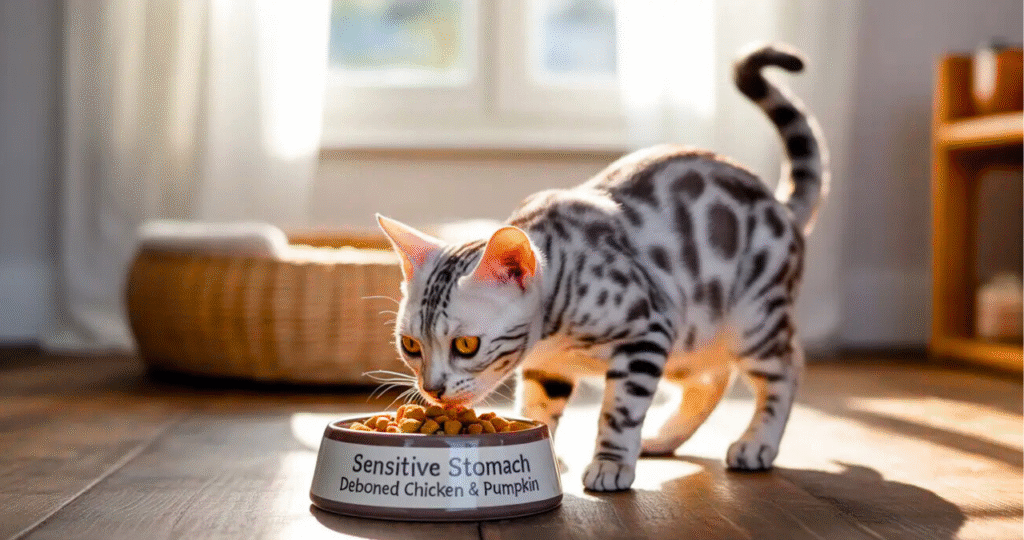

When your feline friend seems to be struggling with stomach upset, loose stools, vomiting, or just general digestive discomfort, understanding what “sensitive stomach” really means is the first step. Cats with a sensitive stomach don’t necessarily just have a picky appetite. In many cases, their digestive tract is more easily irritated by certain ingredients, or they may have underlying issues like low-grade food intolerance, minor gastrointestinal inflammation, or simply require more gentle nutrition. While the term “sensitive stomach” covers a broad spectrum, what matters is recognising the signs, then selecting the right nutrition — in this case, the best dry food for cats with sensitive stomachs.
A sensitive stomach in a cat can show up in a few ways: vomiting shortly after eating, recurring soft or unusually large stools, gas, or even just a less active appetite because digestion isn’t comfortable. Linking these symptoms and diet is essential: sometimes the food the cat is eating may be too rich, too high in fat, or contain ingredients that are harder for the gut to process. As one veterinary nutrition guide explains, foods designed for sensitive digestion typically emphasise “low to moderate fat, easily digestible animal proteins, and reduced carbohydrates.”
When you’re looking at dry food for cats with sensitive stomachs, you’re essentially looking for gentle formulas: they use high-quality protein sources, include digestibility aids (like prebiotics, maybe probiotics), contain limited or well-tolerated ingredients, and avoid unnecessary hard-to-digest fillers or additives. For example, a well-formulated dry food might highlight that it supports “gentle nutrition for cats with sensitive digestion” and is “specially crafted to support their delicate stomachs”.
It’s also worth noting: before switching a cat with obvious stomach trouble over to a new diet, you should consult your veterinarian. Some “sensitive stomach” signs could mask larger issues (like inflammatory bowel disease, food allergies, or a parasitic infection). But once simpler causes are ruled out, selecting the best dry food for cats with sensitive stomachs becomes a key tool in restoring comfort, digestion, and overall well-being.
What Makes a Dry Food Suitable for Cats with Sensitive Stomachs
Picking the best dry food for cats with sensitive stomachs is not about gimmicks, but about key nutritional and ingredient choices. Here’s a breakdown of what to look for — think of these as your checklist when comparing kibble bags.
1. Easily digestible proteins
Sensitive stomach formulas often use proteins that are well-tolerated. That means animal-based proteins (chicken, turkey, lamb, etc) where the ingredient list is clear and primary. Some even go for “rice & oatmeal” or other gentle carbohydrate sources that support digestibility instead of heavy grains or complex fillers. For example, one formula from a major brand emphasises “rice & oatmeal… is easily digestible and gentle on the digestive system.”
2. Added prebiotics and fibre for gut health
Even the best protein won’t solve everything if the gut flora and fibre balance are off. Good dry food for cats with sensitive stomachs will include prebiotic fibres (such as FOS, beet pulp) to support beneficial gut bacteria and ease digestion. One such product lists “prebiotic fiber (FOS) to fuel beneficial gut bacteria & support a balanced microbiome.”
3. Moderate fat and reduced risk of digestive overload
High fat can be an irritant. In cats with sensitive stomachs, a food with moderate fat content may reduce the risk of vomiting or loose stool. A review article states that if a cat’s digestive system is struggling, formulas with “low to moderate fat” are often recommended.
4. Minimal allergens or well-tolerated ingredient profile
Fewer unknowns in the ingredient list means fewer potential triggers. For cats with stomach sensitivity (or perhaps mild food intolerance), a formula without a long list of additives, exotic proteins, or heavy fillers is preferable. Some brands market “single-source protein” or “reduced allergen” formulas for this reason.
5. Complete and balanced for adult cats
Even though the emphasis is on gentle digestion, the nutrition must still be complete and balanced for adult maintenance. A sensitive-stomach formula should not compromise on essential nutrients just to be gentle. For instance, one product assures “provides complete and balanced nutrition for adult cats.”
6. Transition plan and feeding schedule
Even the best food will cause trouble if switched abruptly. Cats with sensitive stomachs benefit from a gradual transition (typically 7 days or more) from their current diet to the new food. One veterinary guidance article emphasises this: “Mix increasing amounts of your pet’s new food with decreasing amounts of old food over 7 days.”
7. Realistic expectations and monitoring
Choosing a good dry food is one part; monitoring how the cat responds is equally important. If after a few weeks the stool remains loose, vomiting persists, or the appetite declines, you may need to go on a prescription diet or veterinary therapy. According to one expert, if cats have a sensitive stomach, “changing your cat’s diet could improve their symptoms. However, if your cat has a food allergy, the vet may instead prescribe a hypoallergenic diet.”
Putting all of this together, you can evaluate a product’s packaging or online ingredient list and check whether it qualifies as one of the best dry foods for cats with sensitive stomachs. Next, we’ll look at how to pick among the available options and then review a few standout choices.
How to Evaluate and Compare Dry Foods for Sensitive Stomachs
When you’re standing in front of the pet-food aisle (or browsing online) looking for the best dry food for cats with sensitive stomachs, the number of brands and claims can be overwhelming. Here are practical tips to help you compare and pick wisely.
Tip A: Read the ingredient list with your cat’s digestion in mind
Start from the top. Is the first ingredient a named animal protein (e.g., turkey, chicken, lamb)? That’s a good sign. Then look for digestible carbohydrates (rice, oatmeal, barley) or gentle grain‐free alternatives. Watch out for vague terms like “animal by-product meals” or “meat meal” that may vary in digestibility. Also scan for long lists of preservatives, artificial colours or flavours — you want a simpler formula for a cat with a sensitive stomach.
Tip B: Analyse the guaranteed analysis/nutrition panel
You’ll want to see moderate fat and reasonable protein, but the emphasis should be on digestibility. For example, one formula shows 35% protein, 22% fat, and prebiotic fibre. Some cats with sensitive digestion might benefit from slightly lower fat. Additionally, check that the food is complete and balanced for adult maintenance (check for AAFCO statement or similar). Reference guides explain that formulas for sensitive stomachs are built to meet these standards.
Tip C: Look for special digestive supports
Brands often include specific phrases like “sensitive skin & stomach”, “gentle digestion”, “delicate digestion”, “prebiotic fibre” or “single-source protein”. These indicate that the formula is tailored for cats with digestive challenges. For example, one major brand says: “Formulated specifically for cats with sensitive systems, each formula supports digestive health, healthy skin, and a shining coat.”

Tip D: Consider your cat’s broader health context
If your cat has just occasional loose stools, a good quality sensitive-stomach dry food may suffice. But if symptoms include chronic vomiting, weight loss, hair loss, or signs of food allergies (itchy skin, ear infections), you might need to explore veterinary diets. According to one article, “If your cat has a food allergy, the vet may instead prescribe a hypoallergenic diet to relieve their symptoms.”
Tip E: Transition gradually and monitor response
Once you pick a formula, introduce it slowly: days 1-2 mix 25% new food with 75% old, days 3-4 50/50, days 5-6 75%/25%, day 7 onward full new. This is especially vital for cats with sensitive stomachs, since sudden changes may provoke vomiting or regurgitation. Then monitor stool quality, appetite, activity level, and overall comfort. If things improve, stick with it. If not, revisit the vet.
Tip F: Realistic expectations — give it time
Switching to a well-formulated dry food may not fix everything overnight. For some cats, improvement in stool consistency may take a week or two; improvement in vomiting or appetite might require longer. If symptoms persist more than 2-3 weeks, revisit your vet for possible further diagnostics. One guide states: “Changing your cat’s diet could improve their symptoms.”
Tip G: Budget and availability
While you want high quality, also make sure the food is available consistently (especially in your region) and fits your budget without forcing you to switch brands frequently (which could upset your cat’s digestion further). In regions like Pakistan (and elsewhere globally), check local pet stores or online distributors. One product listing in Pakistan shows “Happy Cat Intestinal Dry Food for Stomach Issues & Health” geared towards cats with digestive sensitivity.
By following these evaluation tips, you’ll be in a strong position to select the best dry food for cats with sensitive stomachs. Next, we’ll highlight a few specific formula options that are consistently regarded as high quality.
Top Dry Food Formulas for Cats with Sensitive Stomachs
Here are several dry food formulas that have earned good reputations for cats with digestive sensitivity. I’ll summarise what each brings to the table (without making it sound like an advertisement). You’ll want to check local availability and cost, but these serve as reliable benchmarks.
Formula A – Gentle digestion by a trusted brand
One well-known product notes: “Highly digestible food that is gentle on the stomach. Prebiotic fiber (FOS) to fuel beneficial gut bacteria & support a balanced microbiome.” This is exactly the sort of formula you should seek when shopping for the best dry food for cats with sensitive stomachs. It combines digestibility with gut support via prebiotics and meets adult maintenance nutrition standards.
Formula B – Sensitive skin & stomach combined support
Another formula emphasises: “Formulated specifically for cats with sensitive systems … each formula supports digestive health, healthy skin and a shining coat.” If your cat shows both digestive sensitivity and skin/coat issues (which often go hand in hand), this sort of dual-focus formula might be beneficial. It uses ingredients chosen for their gentleness (such as rice & oatmeal) and supports digestion via appropriate nutrients.
Formula C – Specialist sensitive digestion line
Some brands offer dedicated “sensitive digestion” dry food: for example, one states it is “formulated for adult cats with digestive tract sensitivities.” These niche formulas may include fewer ingredients, more targeted gut support, and stronger guarantees around tolerability. If your cat is really struggling with digestive upset, this might be the level to go for.
Formula D – Trusted mainstream formula for sensitive cats
A popular mainstream brand describes a formula where “real turkey is the first ingredient … made for cats with sensitive systems, this … features an easily digestible formula with added prebiotic fiber.” This shows that even in widely available formulas, you can find good sensitive-stomach support, reducing the need for exotic or very premium products.
When comparing these formulas, keep in mind the tips from our previous heading: ingredients, digestibility, fat level, and transition plan. Also monitor how your cat reacts: which food produces firmer stool, fewer vomiting episodes, and better appetite/energy. The “best” dry food for cats with sensitive stomachs is the one your particular cat tolerates well.
Transitioning to Sensitive-Stomach Dry Food Without Stress
Even the best dry food for cats with sensitive stomachs will fail to help if the transition is rushed or poorly managed. Here’s how to do it smoothly.
Step 1: Choose a quiet, consistent feeding environment
Cats thrive on routine. Pick a consistent time and place for feeding. Don’t introduce new food while the cat is stressed (for example, immediately after a vet visit or in a busy household). Let the cat get comfortable.
Step 2: Gradual mix over 7 days or longer
As mentioned, start mixing a small amount of the new food with the old. For days 1-3: maybe 25% new / 75% old. Days 4-5: 50/50. Days 6-7: 75/25. After day 7 (or more, if the cat is slow to adapt), move to 100% new food. This slower approach helps prevent vomiting or regurgitation due to a sudden diet change.
Step 3: Monitor stool, vomiting, appetite, and energy
While transitioning, watch for signs your cat is handling the new food well: firmed stool, no new vomiting, steady appetite, and normal play/energy. If you notice increased vomiting, very loose stool, or the cat refuses the food, pause and possibly consult your vet. A sensitive stomach means extra caution.
Step 4: Maintain consistent feeding times and portion control
Avoid free-feeding (leaving an unlimited bowl) if your cat has a sensitive stomach. Instead, feed measured meals at consistent times. This helps digestion and reduces the risk of “scarf and barf” — a scenario where a cat eats too fast and then vomits. One veterinary article points out that cats designed for small, frequent meals are prone to digestive issues if large meals are offered.
Step 5: Keep fresh water available and consider a wet/dry mix
Even though we’re discussing dry food, ensure the cat has fresh water available always (especially if switching diets). Some owners find mixing a small portion of wet food with the new dry can ease the transition and aid hydration — but only if the wet food is also suited for sensitive digestion.
Step 6: Give it time and avoid switching too soon
If you switch foods and then don’t allow enough time for your cat’s digestion to adapt, you risk misjudging the outcome. Give at least 2-3 weeks of consistent feeding before judging whether the food is working. If, after that, you still see frequent vomiting or soft stool, the new formula might not be ideal, and you may need to try another or consult your vet. One guide states: “If your cat’s digestive system is struggling, changing your cat’s diet could improve their symptoms.” To benefit from the best dry food for cats with sensitive stomachs.
Realistic Expectations — What Improvement Looks Like
Switching to a sensitive stomach formula is part of the solution, not always the whole solution. Understanding what kind of improvement you might expect helps manage your expectations and makes monitoring easier.
What improvements to look for
- Stool consistency becomes firmer and more regular (less loose or unformed stools)
- Vomiting or regurgitation decreases in frequency or stops entirely
- Appetite returns to normal (the cat is interested in food, eats without hesitation)
- Energy levels improve (the cat is playful, alert, not lethargic)
- Coat and skin may improve (since digestion impacts nutrient absorption)
- Fewer signs of discomfort (less gas, fewer “looking for the litter box” episodes)
What not to expect immediately
- You might not see a dramatic change overnight. Some cats adapt quickly, but others take weeks to show improvement.
- If the sensitive stomach is due to an underlying condition (food allergy, IBD, parasites), diet alone may not completely resolve symptoms. You may still need veterinary investigations.
- A formula labelled for sensitive stomachs does not guarantee your specific cat will tolerate it perfectly — individual variation exists.
When things might not improve (and what to do)
If, after 3-4 weeks, your cat still shows frequent vomiting (especially without hairballs), persistent loose stools, weight loss, or blood in stool, this suggests the issue is more than “just food choice.” Veterinary tests might be needed. One article states that while changing diet can help, “if your cat has a food allergy … the vet may instead prescribe a hypoallergenic diet.”
Common Mistakes Owners Make (and How to Avoid Them)
To make your choice of the best dry food for cats with sensitive stomachs effective, avoid these typical mistakes.
Mistake A: Switching abruptly
As discussed, an abrupt change can cause more harm. Even a food designed for sensitive stomachs needs a slow introduction.
Mistake B: Assuming “sensitive stomach” means “any food will do”
Not every “sensitive digestion” formula is equal. Some are better than others in terms of ingredients and support. Read the label; just because it says “sensitive” doesn’t guarantee it meets your cat’s specific needs.
Mistake C: Ignoring portion size and feeding frequency
If you feed too much at once or leave large bowls of food out all day, cats may overeat, which can stress their digestion. Feeding measured meals helps.
Mistake D: Changing multiple variables at once
If you change food, feeding schedule, and location all at once, you won’t know what helped or what didn’t. Make one change at a time (start with food), and keep the rest consistent.
Mistake E: Giving up too soon
Some owners switch food after only a few days when they don’t see immediate results. If you give up too quickly and switch again, the cat’s digestion is stressed repeatedly. Stick with one good formula for at least 2-3 weeks unless your vet advises otherwise.
Mistake F: Skipping water or supplementing without reason
Ensure the cat always has fresh water. Some owners also add supplements “just in case,” which may interfere with digestion or nutrient balance. If your cat is eating a complete and balanced formula designed for sensitive stomachs, additional supplementation is rarely needed proactively.
Avoiding these mistakes gives you a stronger chance of success when selecting the best dry food for cats with sensitive stomachs.
How Much Does the Sensitive-Stomach Dry Food Cost, and Is It Worth It?
When evaluating the cost-benefit of the best dry food for cats with sensitive stomachs, it’s not just about the price tag — it’s about the value your cat gets and the potential savings in vet bills or stress.
Cost factors
Sensitive formulas tend to cost more than regular standard dry foods. Why? Because they use higher-grade ingredients, include prebiotics/fibre support, and may undergo more stringent formulation for digestibility. Availability in your region (e.g., Pakistan) may influence cost due to import, brand, or shipping. For example, one local listing for a specialised intestinal dry food is shown at a particular price in PKR.
Is it worth paying more?
Yes — if your cat’s digestive system is unhappy, the extra cost is often justified. Better digestion typically means: fewer vet visits, fewer medications or supplements, less waste of food (if the cat eats well and retains nutrients). Quality of life also improves — your cat is more comfortable, which has intangible but real value.
Balancing cost and brand
You don’t always need the most expensive “premium” label to get a good formula. If your cat tolerates one of the mid-range sensitive stomach dry foods and shows improvement, you can stick with it. What matters is the right match for your cat, not the fanciest marketing.
Long-term benefits
Over time, consistent feeding of the right diet may reduce flare-ups of digestive upset, reduce the frequency of discomfort, and keep your cat healthier. This means ultimately better value. So when reviewing cost, consider that the “best dry food for cats with sensitive stomachs” might save costs down the line.
Frequently Asked Questions (FAQs) About Sensitive-Stomach Dry Food for Cats
Here are some common queries owners have, answered in an expert-style but casual tone.
Q: Can I just feed wet food instead of dry if my cat has a sensitive stomach?
A: Absolutely, wet food can be an excellent option for cats with digestive trouble — it provides more moisture and can be easier to digest than some dry foods. But since you asked about dry food specifically, it’s important to know that dry formulas exist that are specifically crafted for sensitive digestion. If you prefer wet or a mix of wet + dry, make sure the wet food is also gentle and you’re still managing portion size and ingredient quality.
Q: My cat vomits hairballs often — does that mean they have a sensitive stomach?
A: Not necessarily. Hairballs are common in cats with long hair or who groom a lot. Vomiting hairballs is different from vomiting food or bile regularly. If the cat vomits shortly after eating, or more than once a week without hair, or has loose stools/diarrhea, these symptoms point more toward stomach sensitivity or a digestive issue. One source emphasises this distinction.
Q: How long until I see improvement after switching to a sensitive-stomach dry food?
A: It varies. Some cats may show firmer stool and fewer vomiting episodes within a week; others may take 2-3 weeks. If you don’t notice any improvement within this time, and especially if symptoms persist or worsen, it’s time to revisit your vet.
Q: Can I switch back to regular dry food once my cat is feeling better?
A: It’s tempting, but not always wise. If your cat’s system is sensitive, then returning to a regular food may trigger a relapse. Think of this as long-term maintenance rather than a temporary fix. If cost is a concern, you could consider rotating between a sensitive formula and a gentle regular formula, but monitor carefully.
Q: My cat seems to have skin problems and digestive issues. Should I pick a food that supports both?
A: Yes, that can be a smart move. Some formulas target both digestive health and skin/coat health (since skin issues often accompany digestive problems). One dry food is formulated with both “sensitive skin & stomach” support
My Final Thoughts — Choosing and Committing to the Best Dry Food for Cats with Sensitive Stomachs
If I were summarising as a feline nutrition expert talking to you over coffee, here’s what I’d say: Cat digestive systems are delicate, and a “sensitive stomach” label is serious. It means your cat deserves a diet that doesn’t just fill the bowl but supports their comfort, digestion, and overall well-being. Choosing the best dry food for cats with sensitive stomachs means being selective about ingredients, monitoring your cat’s response, and committing to the change rather than hopping between brands.
Start by selecting a quality formula with high-quality protein, prebiotic fibre, moderate fat, and gentle carbohydrates. Make the transition slowly and monitor your cat’s stool, appetite, energy, and comfort. If improvement follows, you’ve made a win. If not, don’t mistake the diet for a miracle cure — go back to the vet, because the sensitive stomach may be a symptom of something deeper.
Remember: your cat is unique. The best dry food for cats with sensitive stomachs will be the one that your cat tolerates, enjoys, and thrives on. Don’t be swayed purely by marketing — read the label, check the nutrient profile, and trust what your cat’s body tells you. Once you find that good match, stay consistent. Better digestion means a happier cat, fewer clean-ups, and a more relaxed you.
Here’s wishing your feline companion many happy, comfortable meals ahead!