
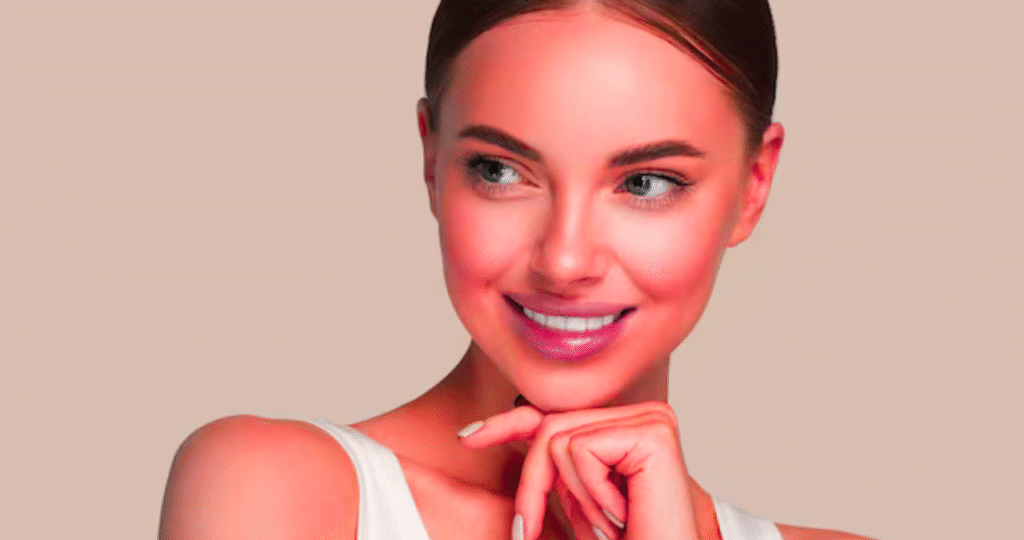

What Does Healthy Skin Look Like Up Close, When you gaze closely at your skin — literally getting up close in the mirror, or perhaps examining a well-lit photograph — what you’re really looking for is more than just a flawless surface. You’re observing a living, breathing organ that reflects your internal health, habits, environment, and care. In this article, I’ll take you through what healthy skin looks like up close, how you can recognize it, and why those characteristics matter. I’ll speak casually yet with expert insight, so you’ll feel like you’re talking with someone who works with skin every day. Let’s dive in.
Heading 1: The Texture and Surface Appearance of Healthy Skin
One of the first things you notice when you look up close at skin is the texture and the surface appearance. Healthy skin doesn’t mean absolutely flawless in every way — it doesn’t mean zero pores, zero fine lines, zero shadows. Instead, it means that the skin’s surface presents with a consistent and stable appearance, without signs of distress or damage.
Smoothness, but not glass-perfect
When we say healthy skin is “smooth”, we don’t mean surgical or fake-flat. What we mean is that it has a uniform texture. According to research, smoothness (or low roughness) is a key attribute of high-quality skin. For example, one overview described healthy skin as “smooth, even-toned, and has a natural glow”. When you press lightly on healthy skin (after a wash or bath), it should feel supple and bounce back. In that sense, you’ll notice pores are present (everyone has pores), but they are not overly enlarged, not gaping holes. The surface has a gently even profile, rather than large craters or constant bumps.
Consistent colour and minimal irregularities
Up close, you’ll want to see that skin tone is reasonably uniform. That doesn’t mean absolutely identical across every millimetre, because trivial variations are totally normal, but it means there are no large patches of discoloration, no obvious flaking or scabbing, no visible “bad texture” such as skin that looks crepey or papery. For example, one source says: “Healthy skin should appear… with minimal redness and no signs of a rash.” Another explained that healthy skin typically appears consistent in colour, free from patches, blemishes, and excessive redness or discolouration. When you’re up close, you can see the small peaks of hair-follicle openings (tiny, tiny) and pores, but in healthy skin, those features are subtle and not exaggerated.
Subtle shine or radiance (but not grease)
Another feature is how the skin interacts with light. Up close, healthy skin will reflect light in a gentle way instead of scattering it wildly. This means the surface is sufficiently hydrated and the outer dead-cell layer isn’t excessively thick or flaky. In one clinical paper on skin quality, the authors note that attributes like “radiance” or “glow” depend on hydration levels and how much dead or dry skin is blocking light reflection. PMC So if when you inspect your skin up-close you see a healthy bounce, subtle glow, small pores, uniform texture, gently even tone — those are strong indicators that your skin is functioning well.
Heading 2: The Feel and Functional Qualities of Healthy Skin
Looking up close only tells part of the story. The feel of your skin, its response to touch and to changes in environment, and how it behaves functionally are just as important. Let’s explore what healthy skin feels like and how that reflects its overall condition.
Hydrated, resilient, not tight or overly oily
When skin is healthy, you shouldn’t feel persistent tightness, burning, stinging, or itching for no reason. According to the American Academy of Dermatology, one sign of healthy skin is that it “feels comfortable, without soreness, burning or itchiness”. If you touch the skin gently and press it, it should spring back — that bounce-back quality indicates good elasticity and hydration. One expert in skincare describes healthy skin as “hydrated and resilient, not overly sensitive or prone to frequent break-outs”.On the flip side, if skin is extremely oily (and constantly shiny), or extremely dry (flaky, cracked, rough), then it may be functioning less well. The ideal isn’t zero oil, zero dryness, but a proper balance.
A strong barrier, minimal signs of damage
Healthy skin isn’t just about looking good — it’s about functioning well. The skin barrier is the outermost layer of the skin (the stratum corneum), and when it’s working properly, it keeps moisture in and irritants out. When you inspect your skin up close, you may not see the barrier per se, but you’ll see signs of its integrity: skin that isn’t excessively flaky, isn’t chapped, isn’t visibly inflamed, and shows minimal fine damage. For example, a pamphlet on skin care states: “Healthy skin is smooth, with no breaks in the surface. It is warm (not hot or red) and neither dry and flaky nor moist and wrinkled.” Good circulation, no chronic redness, no open cracks — these are signs the barrier is intact. And since healthy skin protects us, regulates temperature, defends against microbes, and more, its good state reflects overall wellbeing.
Elasticity and firmness on close inspection
When you look up close and touch the skin, you can check for firmness and elasticity. Younger or well-kept skin will rebound quickly from gentle pressure, and you won’t see sagging, loose folds, noticeable crepiness, or deep depressions. In the clinical discussion of skin quality, attributes such as elasticity (recoil-ability) and firmness are mechanical properties tied to healthy skin. So when your skin responds well to touch and hasn’t visibly sagged or developed deep creases or laxity, that’s a good sign of functioning and structural integrity.
Heading 3: Common Misconceptions When Viewing Skin Up Close
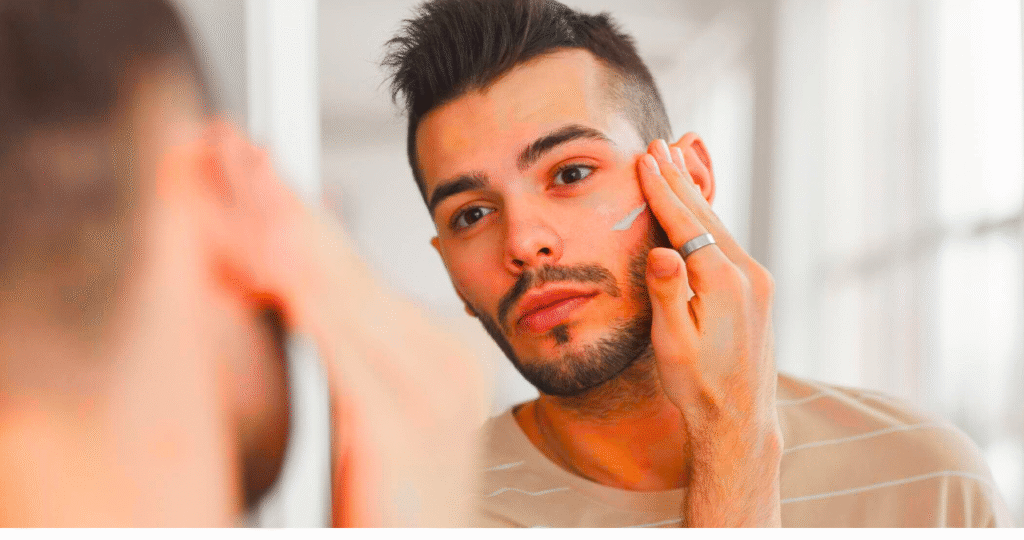
When you’re looking at skin under a magnifying mirror or bright light, it’s easy to fall into the trap of “it’s not perfect, therefore it’s unhealthy”. Let’s correct some common misconceptions and help you calibrate what “healthy” really means in realistic terms.
It’s not about perfection.
Just because you can zoom in and see pores, fine lines, slight variation in tone, or texture irregularities doesn’t mean the skin is unhealthy. Many people believe healthy skin must look like flawless plastic — but in reality, the experts emphasise function over perfection. For example, one dermatologist stressed that textured skin or slight redness doesn’t necessarily mean the skin is unhealthy. Even the community of skincare enthusiasts notes that “healthy skin is typically a bit glowy (not oily), a bit smooth (but not necessarily flat), a bit bouncy.” So, trying to eliminate all visible pores, all fine lines, is unrealistic and possibly not productive; instead, aim for the signs of functioning skin.
Lighting and magnification distort perception.
When you inspect skin up close under direct bright light or magnification, you will see features you don’t normally notice in normal lighting — enlarged pores, slight shadowing, fine pits or texture variations. That doesn’t automatically mean the skin is damaged or unhealthy. What matters is how the skin appears in typical conditions and how it behaves. Clinical assessments of skin quality emphasise attributes like texture, tone, hydration, and elasticity. So keep perspective: an up-close peek is useful, but judge within normal context rather than hyper-magnified scrutiny.
“Glow” doesn’t mean grease, and clear doesn’t mean unblemished.
There’s a difference between a healthy skin glow and unwanted oiliness. Healthy skin reflects light in a soft, even way — it doesn’t glitter or appear drenched in oil. Sources list glow, plumpness, radiance, and smoothness as signs of healthy-looking skin. Also, the presence of the occasional blemish or slight discoloration does not necessarily mean the skin is unhealthy. What matters is frequency, severity, and whether there is underlying inflammation or barrier breakdown. One article emphasises that you shouldn’t expect “perfect, flawless” skin to be healthy. In summary, healthy skin doesn’t equal zero marks, but rather minimal disruptive marks and a stable appearance.
Heading 4: Up-Close Features by Region — What to Check
When examining skin up close, it’s helpful to consider different regions (face, under-eye area, neck, hands) as they often reveal different things. Let’s look at what healthy skin should look like up close in some key areas.
Facial skin (cheeks, forehead, nose, chin)
In the facial zone, up close, you’ll expect:
- Pores that are visible but not dramatically enlarged.
- A texture that doesn’t have large rough patches or obvious scale.
- A consistent colour — perhaps slight natural shadows, but no large patches of redness, dark spots or extreme uneven tone.
- A skin tone that isn’t dull and lifeless — the skin should reflect light softly.
- No persistent open lesions, cracks, or flaking. If you press gently, it shouldn’t feel painfully tight or overly oily.
- As one dermatologist notes, healthy skin looks smooth and feels smooth, and you’ll notice the uniform layout of pores and fine peaks around hair follicles (yes, our face has a fine layer of hair), but all of that is normal.
Under-eye and periorbital region
The skin around the eyes is thinner; when you look up close, you’ll notice that it’s healthy here:
- Doesn’t show constant puffiness or deep hollows (though genetics play a role).
- Has minimal redness, irritation, or broken capillaries.
- While some fine lines are normal, the skin still has some bounce and isn’t sagging severely.
- The colour is reasonably in tone with the rest of the face (though naturally, slight variations exist). Basically, you don’t want skin here looking chronically dull, crepey, or blotchy.
Neck, décolletage, and hands (older indicators)
These regions often show early signs of environmental exposure — when you inspect them up close and the skin is healthy, you’ll see:
- For the neck: consistent texture (not markedly different from your facial skin), no deep leathery creases or grooves from sun damage.
- For the hands: skin that is supple, not thin, not overly translucent, where veins and bones dominate. The knuckle region should not be excessively wrinkled or papery.
- In all these areas, you expect minimal visible damage from sun or environment: no large brown spots, no thickened leathery folds. Because healthy skin across the body indicates healthy habits (sun protection, proper hydration, nutrition). According to a source, the skin is a mirror of a healthy body: “Healthy skin is smooth, with no breaks in the surface. … Healthy skin is a mirror of a healthy body.”
Heading 5: Why Up-Close Appearance Matters — The Signals Behind the Skin
Inspecting skin up close isn’t just vanity — it gives clues about what’s going on beneath the surface. Healthy skin appearance signals good internal and external balance, while deviations can hint at underlying issues.
Indicator of underlying health and lifestyle
The skin is the body’s largest organ and reflects more than just your skincare routine. For example, the American Academy of Dermatology explains that skin, hair, and nails provide clues to underlying health — from fluid intake to sun damage to systemic disease. When you examine your skin up close and notice, say, a chronically dull appearance, uneven tone, extreme dryness, or persistent redness, these may be warning signs of sun damage, dehydration, nutritional deficiency, or circulation problems. For instance, dry flaky patches could signal problems with barrier function or underlying illness.
Functionality: protection, barrier, resilience
When your skin appears healthy up close, that means your barrier is intact, your hydration is adequate, your circulation is supporting the dermal layers, and your lifestyle/environment is cooperating. The skin’s job is defence, regulation, sensation, and temperature control. When it is compromised, you’ll see texture changes, uneven tone, larger pores, sagging, and flaking. The clinical review on skin quality emphasises the mechanical properties of skin — such as thickness, elasticity, firmness — as well as topographical properties like smoothness. Therefore, looking up close allows you to see both the surface and, to some extent, infer the structural health beneath.
Signs of ageing or damage may be revealed early.
Examining skin up close gives you the chance to detect early signs of ageing or photodamage before they become major. For example, collagen and elastin loss show up as decreased elasticity, more visible pores, and rougher texture. By catching such signs early, you can adapt your skincare, lifestyle, or seek professional advice to preserve skin health or slow down decline.
Heading 6: Enhancing the Up-Close Appearance of Healthy Skin: Key Practices
You’ve learned what healthy skin up close should look and feel like. Now let’s talk about how to improve or maintain it — what habits support that good up-close appearance.
Hydration and diet
Hydration is key. Well-hydrated skin presents better up close: it appears supple, the bounce is better, and the texture is smoother. The Mayo Clinic states that eating a healthy diet (lots of fruits, vegetables, whole grains, lean protein) and drinking plenty of water can help keep skin looking and feeling its best. Also, good nutrition supports the dermal collagen and elastin networks, barrier lipids, and repair capacity. When the diet suffers, skin may show roughness, lack of radiance, and poor rebound.
Sun protection and environmental care
No matter how well you care internally, sun exposure, pollution, smoking, and chronic stress all degrade skin. When you examine skin up close and see hyper-pigmentation, coarse texture, enlarged pores, often sun damage or oxidative stress has been at work. Many sources emphasise daily sun protection (even if you don’t feel you’ll be outside long) as essential. 1 By protecting your skin from UV, you preserve the texture, tone, elasticity — all the features you want to look good up close.
Gentle, regular skin care
On the exterior side: consistent cleansing, proper moisturising, occasional exfoliation (to remove dead skin cells but without damaging the barrier), all improve the up-close appearance. For example, the “six signs of healthy-looking skin” list includes smoothness, softness, plumpness, and brightness — achieved via gentle exfoliation and moisturising. Avoid over-aggressive scrubs or harsh treatments that damage the barrier and produce rough texture or redness, which will show up when you look closely. Also managing stress, getting good sleep, and avoiding smoking — these support skin that looks calm and even up close.
Heading 7: Realistic Expectations — What Up Close Healthy Skin Isn’t
To wrap up some reality checks: when you inspect skin under magnification or bright light, it’s useful to know what healthy skin isn’t.
Not poreless, not wrinkle-free, not perfect
Healthy skin does not mean zero pores, zero lines, zero shadows, or no variation. The idea of “perfect skin” is misleading and often unrealistic. One skincare community member posted:
“Healthy skin is typically a bit glowy (not oily), a bit smooth (but not necessarily flat), a bit bouncy.”
Meaning: visible pores are fine, tiny fine lines are fine, slight texture is fine — as long as the skin is stable, comfortable, and functioning. Expecting perfection can lead to excessive treatments or frustration.
Not only about aesthetics, but also about health
Focusing purely on visual perfection can lead you to miss the deeper point. Healthy skin looks good up close because it is healthy — not necessarily the other way around. The focus should be on barrier strength, hydration, minimal damage, good circulation, balanced oil-moisture, and so on. The visual features (smoothness, even tone, glow) are consequences of that health rather than superficial goals. For example, the American Skin Association reminds us that the skin is the body’s largest organ, and what you see reflects choices like nutrition, hydration, sun exposure, smoking, and stress.
Not static — it evolves.
Healthy skin up close today doesn’t guarantee the same tomorrow if underlying habits change. Lifestyle, environment, and age all affect skin. So maintaining healthy skin is a process. The appearance you inspect now is a snapshot. Commit to ongoing care rather than a one-time fix.
Conclusion
When you look at the question: “What does healthy skin look like up close?”, here’s the summary: on inspection you’ll see a smooth surface without being unnaturally flat; you’ll see evenness of tone without large blotches; you’ll see subtle bounce and light reflectivity (a soft glow) rather than dullness or grease; you’ll feel skin that is comfortable, resilient, hydrated, with minimal signs of distress; you’ll see no large cracks, flakes, open wounds or constant redness. The up-close appearance is the visual and tactile evidence of underlying skin health.